
 In Spain, which produces and consumes more olive oil than anywhere in the world, there is a small Andalucian area south of Cordoba – Baena – where the strictest controls creates one of the finest oils in the world. The regulatory regime controls all aspects of production: olives are harvested by hand and ground to a paste in granite stone mills. The resulting 'free-run' of oil is regarded as the grand cru of oil, with low acid and concentrated flavour. It commands a high price commensurate with its high value-added production process.
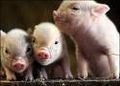
After all the debates over whether the Government over-reacted, or which public agency can lay the blame on whatever public agency, or if the process of traceability is up to scratch, or whether the EU will cough something up (or whether they should), there is little doubt the Government will have to provide some manner of bail-out to the pig industry. There is too much at stake. It is often stated that banks are too important to fail; there are some industries that are too important to fail. And the pig sector is not even a terribly big sector as sectors go. But it cant be allowed to fail or be hobbled. There are too many interests. Look at some of the facts:
There are 7,000 employed in the sector – 1,200 on farms. There are nearly 500 pig producers. The sector is worth nearly €400 million in exports that spread out to 40 countries. This is not a sector you allow to go belly-up for long. The cost of the bail-out has been put at €200 million. Given the tax revenue and export wealth, this is not such a high price.
Whatever the short-term solutions necessary to get the industry back on its feet as soon as possible, whatever the reforms in the regulatory regime (feed suppliers are investigated once a year – would twice a year do the trick?), there are some longer-term considerations.
First, in an industry as sensitive to health as the pig sector, regulation is absolutely paramount. Even though we have one of the more lightly regulated economies in the EU, we are constantly treated to the complaints – mostly from the business sector – of 'too much regulation'. This also includes farmers who have railed, for instance, against nitrates inspection (as if protecting the groundwater is not essential to healthy products).
Regulation is not a burden but rather a liberator. It is a means of protecting consumers, workers, communities, and law-abiding and best-practice businesses and producers. We have seen how farmers and plants and butchers who had nothing to do with the tainting of pig feed are, nonetheless, affected. A strong regulatory regime protects the innocent and the good, and provides the platform from which to launch products and services that consumers have confidence in – a confidence that is now so badly shaken in the pig meat sector that it could take considerable time to win back.
Second, when one sees how complex and integrated the pig sector is, the need for industrial organisation becomes all the more obvious. Examine the individual links in the chain of production – pig feed, pig breeding, transport of pigs, pig slaughtering and processing, packaging and labeling for sale at retail level and on to your table as rashers or ham roast or pork steak. Any break in one of those links can disrupt the whole chain. We have already seen how one pig feed supplier has temporarily broken an entire industry. This chain requires not only organisation to operate in the most efficient manner – it require immense trust, not only between the different actors in the process but, ultimately, between the consumer and the entire industry.
Third, food politics is already moving up the agenda. Not just in the critical areas of health and safety; more and more consideration is being given to sustainability, the treatment of ingredients (whether it's pesticides on vegetables or pigs living their lives in factory cells never seeing the light of day) and locality of production. This is not about that dismal debate – are food issues a middle class concern (which is as much a prejudice of 'middle class' commentators, especially in the UK)? It is also about value for money: what value do I get when my rashers or chicken leg cooks down in a pool of water and grease? It is also about moving up the value-added chain, supplying a brand product of quality which consumers have confidence in – confidence that can see us through the recession in many niche sectors.
Where do these observations lead us? They lead us to industrial and enterprise strategies, and an ethos, rooted in regulation, organisation and strategic vision. That ethos will not be lead by an 'invisible hand', informed by neo-liberal dogma which is ill-equipped to confront the challenges of a modern, complex economy and production process. That ideology conjures up a 'yeomanry capitalism' and, as such, has little to say about a production process that has become more 'social' and 'collective', more complex and modern. We have already seen how the beef sector has escaped the fate of the pork sector. Would this have happened if we hadn't installed a highly regulated regime of traceability? And would that regime have appeared by magic through the proverbial 'invisible hand'?
Baena is an extreme case – producing a product for a very niche market. But there are some lessons there – that we should not be afraid of regulation, or organising our production process so that it results in a quality product, or responding to the demand for quality and value in a creative and economical manner.
In the future, Irish food products (our largest indigenous industry) can become renowned throughout the world for quality and sustainability, winning markets through unshakable consumer confidence. But we will have to eschew the race-to-the-bottom - whether it be over products, labour, or process -and move up that chain in a regulated, organised and democratic manner. Either that or face a future where thre will always be the danger that Irish products are removed from shop shelves around the world.


 Notes on the Front
Leave a reply to James Cancel reply