
Is there an argument for a new housing market model?
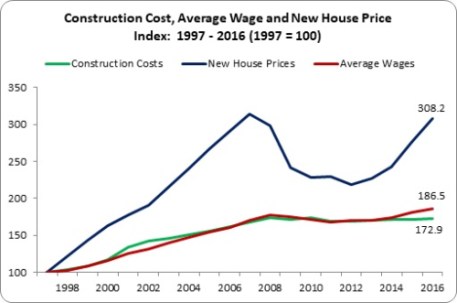
The data from the CSO and Eurostat shows that between 1997 and 2016:
- Average wages grew by 86 percent
- House construction costs (which includes wages and building materials) rose by 73 percent
- New House Prices rose by 208 percent
In that 19 year period, new house prices grew at 2 ½ to nearly 3 times the rate of construction costs and wages. There are three distinct periods in the graph:
- Pre-crash 1997 – 2007: house prices rose by 210 percent – more than three times the rate of construction costs (68 percent) and average wages (70 percent).
- Post-crash 2007 – 2012: new house prices fell by 30 percent while construction costs and average wages were relative stable.
- Recovery 2012 – 2016: new house prices started rising again during this period – by 41 percent while construction costs grew by a mere 2 percent and average wages, less than 10 percent.
It is clear that new house prices operate to a ‘law’ detached from the rest of the economy (again, since 1997 inflation – measured by the GDP deflator – increased by only 49 percent). What would new house prices be today if they grew at the same rate as construction costs, average wages and inflation since 1997?
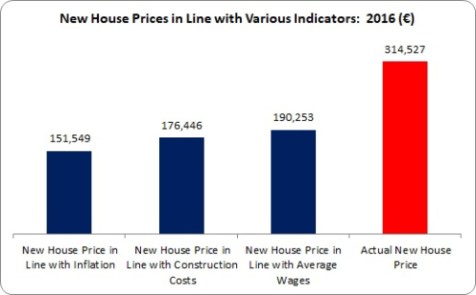
New house prices would be less than half what they are today if they grew by the rate of inflation; would be 56 percent of new house prices if they grew at the rate of construction costs and 60 percent if they matched average wage growth; In other words, affordable.
High and rising property prices – both house purchase and rents – are a drain on the productive economy and can have serious environmental impacts (e.g. when people have to move further away from work to afford to buy or rent an accommodation). We need a new model of housing not only to move the burden of costs on households but to promote the productive economy.
Fortunately, such a model exists. The National Economic and Social Council and the Nevin Economic Research Institute have both outlined cost-rental models. These are being put into practice – at St. Michael’s Estate in Inchicore and by the Ó Cualann Cohousing Alliance.
Rents and house purchases at the cost of building the home – this model could revolutionise the housing ‘market’ and put downward pressure on for-profit housing costs. Further, it would obliterate the distinction between the current ‘public housing for the poor’ and ‘housing for the rest’. Regardless of income or employment status, everyone could avail of non-profit, cost-rental or cost-purchase housing. This is what public housing for all is about.
Of course, there are issues beyond construction costs: land prices, availability of credit, removal of speculative activity. But with considerable land banks in the ownership of local authorities and public agencies, we don’t have to wait to cross every T. We can start now the process of building affordable homes while reforming the remainder of the market.
The only thing stopping us is ideological entrenchment and bureaucratic inertia.
 Notes on the Front
Leave a comment